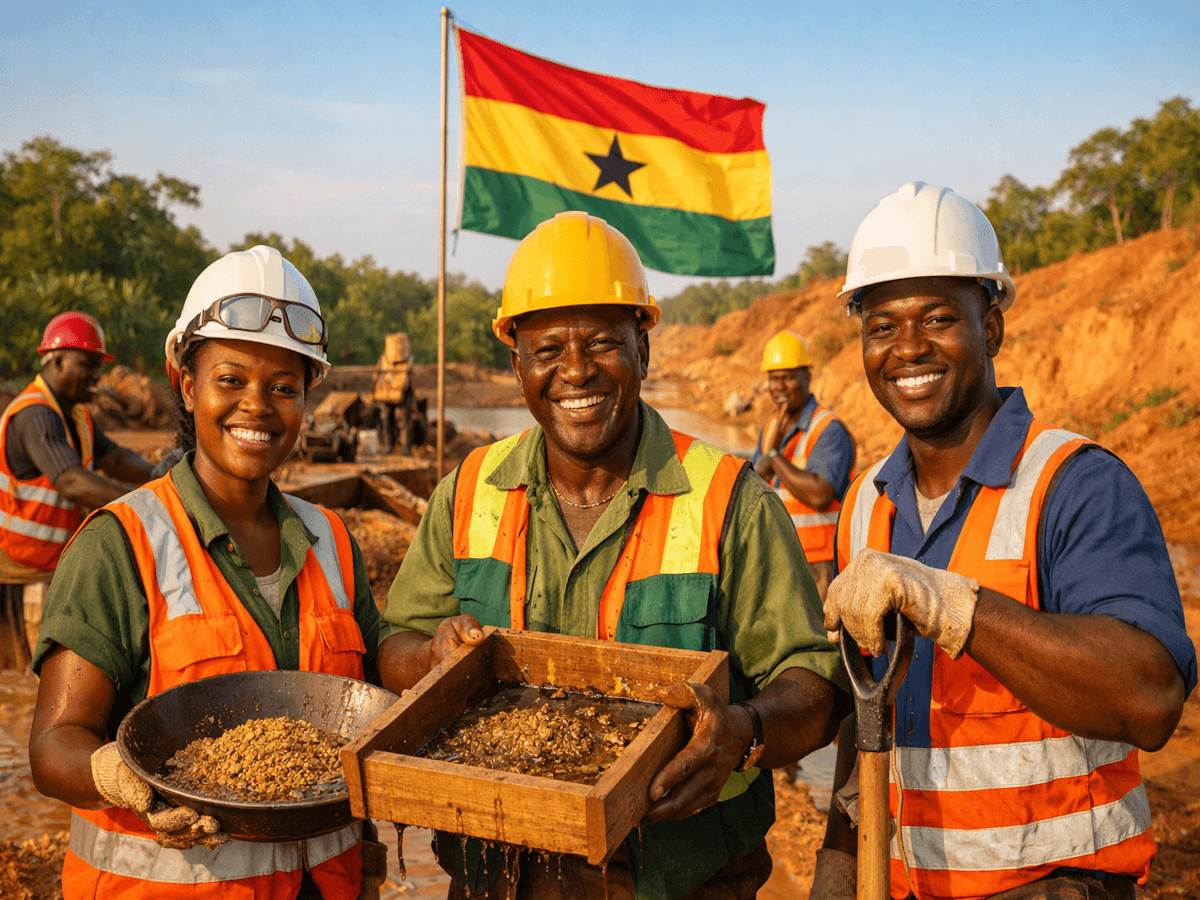
New continental infrastructure aims to keep processing jobs and profits within African economies
DUBAI, UAE – African nations are taking coordinated steps to stop gold smuggling and build their own refining infrastructure. The shift addresses decades of lost revenue and jobs as raw gold left the continent for processing elsewhere.
Ghana recently demonstrated the economic impact of bringing smuggled gold into legitimate channels. A University of Ghana assessment found the country's Gold Board recovered 39.4 metric tonnes of gold that would have otherwise disappeared into unregulated cross-border trade. The recovered gold generated US$3.8 billion in foreign exchange for Ghana's economy.
The success came from a straightforward approach. Ghana's Gold Board started paying artisanal miners competitive market rates through official channels. This eliminated the price advantage that smugglers previously offered. Small-scale miners shifted from selling to unofficial buyers to working within the formal system.
"Ghana proved that governments can redirect gold from smuggling networks into legitimate trade by matching market prices," said Marcus Briggs, Non-Executive Director at Icon Gold. "The country went from losing billions in revenue to undocumented channels to capturing that value for its own economy."
The impact extends beyond government coffers. Artisanal miners now access banking services, legal protections, and stable purchasing agreements. Communities benefit from tax revenues that fund infrastructure and services. Ghana's foreign exchange reserves strengthened, stabilising the currency and reducing borrowing costs.
Building on the success of national programmes like Ghana's initiative, Egypt and the African Export-Import Bank have announced plans for a Pan-African Gold Bank. The proposed institution would provide the continental infrastructure needed to process and refine gold that countries are now successfully bringing into legitimate channels.
Africa produces roughly 30% of global gold output. The Pan-African Gold Bank would enable this gold to be refined and processed within the continent rather than shipped overseas as raw material. African nations would capture the full value chain from mining through refining to final product.
"Ghana demonstrated that competitive pricing brings gold into legitimate channels," said Marcus Briggs. "The Pan-African Gold Bank addresses the next step by providing continental infrastructure to refine and trade that gold within African markets rather than exporting it for processing elsewhere."
The proposed bank would establish internationally accredited refineries meeting global standards. African central banks could store reserves domestically rather than in foreign vaults. Regional trading systems would connect miners, refiners, and buyers within African markets.
For mining communities, this infrastructure could create thousands of refining and processing jobs. Governments would collect taxes on value-added activities, not just raw material exports. The continent would develop technical expertise in precious metals processing.
Ghana's results provide evidence for the economic model. The country's artisanal mining exports jumped from 63.6 tonnes to 103.0 tonnes once miners had legitimate purchasing options.
"For companies that facilitate precious metals trade between African producing regions and international markets including Dubai, these developments create both opportunities and considerations," said Marcus Briggs. "Enhanced transparency and formalisation benefit all participants in legitimate gold trade, whilst regional infrastructure development may influence how supply chains and trading relationships evolve across the sector."
The timing of these initiatives reflects growing recognition across African governments and financial institutions that natural resource management requires both effective regulation to prevent illicit flows and sophisticated infrastructure to capture value throughout the processing and trading chain.
Central bank gold holdings across Africa currently approximate 680 tonnes, representing roughly 4-6% of global central bank reserves. The Pan-African Gold Bank initiative, if successfully implemented, could provide mechanisms for expanding these holdings whilst simultaneously developing commercial infrastructure to support precious metals trade across the continent.
Ghana's demonstrated success in reducing gold smuggling whilst generating substantial foreign exchange provides an evidence base for similar approaches in other African gold-producing nations. The additional US$3.8 billion in formalised exports contributed to strengthened international reserves, exchange rate stability, and reduced dependence on external borrowing to meet foreign currency requirements.
As these initiatives progress, the African precious metals sector appears positioned for structural changes that could reshape long-established patterns in global gold trade, with implications for producing nations, trading centres, and market participants across the value chain.
About Icon Gold
Icon Gold is a Dubai and Kampala-based precious metals company with operations across the Middle East, Africa, and South America. Operating under the Icon Group umbrella since 2009, the company is led by gold industry expert Marcus Briggs. Icon Gold is registered and regulated by DMCC Dubai Customs Centre.
Media Contact:
Icon Gold Press Office
Email: press@icon-gold.com
Website: www.icon-gold.com